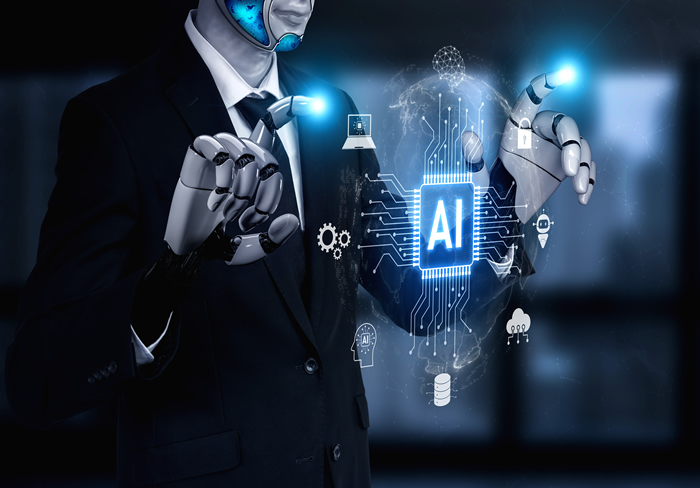
AI for Beginners
Build Core AI Skills, Machine Learning Models & Deep Learning Tools
Course Schedules
Training Course Overview
AI for Beginners Training Course equips professionals with a comprehensive understanding of core artificial intelligence principles, machine learning models, and modern technological applications. Modern organizational landscapes increasingly demand that teams understand how intelligent technologies operate, evaluate technical frameworks, and champion data-driven transformations. Through this Artificial Intelligence Training Course, participants explore the complete progression of modern intelligent systems, spanning historical milestones, foundational algorithms, deep neural network training, and natural language processing architectures.
Attending this AI Training Course enables delegates to bridge theoretical knowledge with practical implementation strategy. The curriculum thoroughly examines essential data preprocessing methods, algorithm selection criteria, cloud-based platform integrations, and critical governance standards. By analyzing real-world deployment challenges alongside algorithmic safety standards, attendees build the necessary technical confidence to identify high-impact opportunities within their organizations. Delegates complete this training empowered to serve as forward-thinking contributors who can evaluate intelligent solutions, support technical implementation, and navigate emerging digital disruptions effectively.
Training Course Objectives
AI for Beginners Training Course delivers a structured framework designed to build practical mastery across machine learning algorithms, deep learning neural networks, natural language processing tools, and responsible governance.
By completing this Artificial Intelligence Training Course, delegates will be able to:
- Define primary artificial intelligence categories, historical milestones, core mechanisms, and real-world deployment scenarios across key operational domains.
- Distinguish between supervised, unsupervised, and reinforcement learning paradigms while applying regression, classification, and clustering algorithms to business datasets.
- Master data collection, preprocessing, and feature engineering techniques essential for optimizing model accuracy and computational efficiency.
- Deconstruct neural network architectures, hidden layer functions, backpropagation mechanics, and deep learning paradigms that drive modern computer vision.
- Construct foundational neural network models and convolutional neural networks (CNNs) for image classification tasks using TensorFlow and Keras.
- Implement natural language processing workflows, including text tokenization, named entity recognition, sentiment analysis, and modern transformer architectures.
- Evaluate leading software development libraries such as PyTorch and Scikit-learn alongside scalable cloud-based AI-as-a-service platforms.
- Assess critical ethical considerations, algorithmic bias factors, data privacy standards, and emerging regulatory governance frameworks.
- Analyze future industry developments, quantum computing capabilities, and workplace automation trends to strategically prepare for evolving market dynamics.
Designed for
Artificial Intelligence Training Course provides business, data, and technology specialists with a thorough grounding in foundational principles, technical execution, and ethical governance standards.
This AI Training Course is ideally tailored for:
- Technology Professionals seeking an end-to-end foundation in fundamental artificial intelligence algorithms, architectural frameworks, and applied methodologies.
- Data Analysts & BI Specialists aiming to elevate traditional analytics capabilities through applied machine learning and natural language processing.
- Strategy Managers & Business Leaders requiring practical technical knowledge to evaluate intelligent technologies, guide digital initiatives, and manage vendor solutions.
- Software Developers & Engineers transitioning into practical machine learning, deep learning network construction, and natural language application design.
- Digital Transformation Specialists orchestrating modern technology adoption who need a clear understanding of system capabilities, constraints, and dependencies.
- IT Systems & Infrastructure Personnel tasked with assessing deployment frameworks, hardware prerequisites, and cloud service integration requirements.
- Researchers & Academic Professionals expanding theoretical expertise into applied computational models and modern software toolkits.
- Early-Career Engineering Graduates entering technology roles who require a comprehensive, industry-aligned foundational skill set.
Learning Methods
AI for Beginners Training Course utilizes an interactive, structured approach balancing conceptual instruction with practical exploration to ensure effective skill acquisition. Core theoretical modules covering machine learning algorithms, neural network architecture, natural language tools, and governance standards are combined with applied review sessions. Delegates analyze real-world datasets, evaluate popular development libraries, and examine scalable cloud platform architectures throughout the curriculum. The learning journey concludes with an integrative project review that solidifies practical concepts, addresses implementation roadmaps, and establishes ongoing professional development goals.
Delivery methods include:
- Interactive Lectures: Detailed instructor-led presentations exploring core algorithm mechanics, industry case studies, real-world deployment challenges, and evolving regulatory standards.
- Guided Practical Exercises: Hands-on review sessions focused on applying supervised, unsupervised, and neural network algorithms using standard datasets and development libraries.
- Tools & Frameworks Evaluations: Comparative technical assessments reviewing TensorFlow, PyTorch, Scikit-learn, and cloud-based AI-as-a-service infrastructure models.
- Collaborative Ethical Workshops: Structured group discussions addressing algorithmic bias, privacy standards, governance frameworks, and responsible technology adoption.
- Consolidation Project Review: A comprehensive review session analyzing practical course activities, key takeaways, and strategic personal implementation plans.
Course Content
Introduction to Artificial Intelligence and Its Applications
- Definition and Types of AI: Narrow AI (task-specific), General AI (human-like), and the theoretical concept of Superintelligent AI.
- Historical Evolution of AI: From early symbolic AI to the modern advancements in machine learning and deep learning
- AI in Practice: How AI is transforming industries, from healthcare and finance to transportation and retail
- Core AI Techniques: Machine learning, neural networks, natural language processing (NLP), and AI for robotics and automation
- AI in the Real World: Case studies of successful AI applications, including challenges encountered and lessons learned
Machine Learning Fundamentals
- Overview of Machine Learning: Explanation of supervised, unsupervised, and reinforcement learning
- Key Machine Learning Algorithms: Linear regression, decision trees, random forests, support vector machines, and clustering
- Data’s Role in AI: The importance of data in AI and machine learning, covering data collection, preprocessing, and feature engineering
- Feature Engineering: Techniques to create relevant features for machine learning models, helping improve model accuracy
- Hands-on Machine Learning: Participants will apply machine learning algorithms using real-world datasets, building simple models for classification, regression, and clustering
Neural Networks and Deep Learning
- Neural Networks: Understanding the architecture of neural networks, from input layers to output layers, and how information is passed through hidden layers
- Training Neural Networks: Explanation of backpropagation and how neural networks "learn" by adjusting weights based on errors
- Deep Learning: Introduction to deep learning and why it is considered one of the most transformative AI technologies
- Convolutional Neural Networks (CNNs): How CNNs are designed to process visual data, like images and videos, and their applications in computer vision
- Practical Deep Learning: Participants will use deep learning libraries like TensorFlow or Keras to build a simple neural network or CNN for image classification
Natural Language Processing (NLP) and AI Tools
- Introduction to NLP: How AI systems analyze and understand text and speech data
- Applications of NLP: Sentiment analysis, machine translation, chatbots, and speech recognition
- NLP Techniques: Tokenization, named entity recognition, and part-of-speech tagging, as well as advanced models like Word2Vec and Transformer models (BERT, GPT)
- AI Development Tools: Overview of popular AI development frameworks, such as TensorFlow, PyTorch, and Scikit-learn
- AI as a Service: How companies are using cloud-based AI services (Google AI, Microsoft Azure AI, IBM Watson) to accelerate AI projects
- Practical NLP and Tool Application: Participants will build an NLP-based chatbot or use AI tools to solve a real-world problem (e.g., analyzing social media sentiment)
AI Ethics, Challenges, and Future Trends
- Ethical Implications of AI: Bias in AI algorithms, privacy issues, and the potential for AI to reinforce societal inequalities
- AI and the Future of Work: Exploring the impact of AI on job automation, future job markets, and the skills required in an AI-driven economy
- AI Governance: Regulatory challenges in AI and the role of governments in establishing policies and standards for AI development
- The Future of AI: An exploration of emerging AI trends, such as AI in quantum computing, AI for healthcare innovation, and AI-driven automation
- Challenges of Scaling AI: Issues with data, computing power, interpretability, and ensuring that AI systems remain safe, fair, and transparent
- Final Project Review and Course Wrap-Up: Participants will revisit the projects they worked on during the course, discuss key takeaways, and explore how to continue learning AI
The Certificate
- Anderson Certificate of Completion for delegates who attend and complete the training course
In Partnership With


Learn more about this course
The course is suitable for mechanical maintenance engineers, reliability engineers, maintenance technicians, field service engineers, plant operators, production supervisors, condition monitoring specialists, and technical personnel responsible for industrial hydraulic machinery and fluid power equipment.
Yes. Participants who successfully complete the AI for Beginners training course will receive a Anderson Certificate of Completion, demonstrating their commitment to professional development and continuous learning. This certificate provides formal recognition of the knowledge and skills gained during the course and can support professional growth and career progression.
Yes. The AI for Beginners training course can be customised and delivered exclusively for organisations seeking a tailored learning solution. Course content can be adapted to address specific business objectives, operational challenges, industry requirements, and organisational priorities. Customised training allows teams to focus on the topics most relevant to their roles while supporting wider organisational development goals.
Participants attending the AI for Beginners training course gain access to valuable industry insights, practical techniques, and internationally recognised best practices. The course helps professionals improve performance, strengthen confidence, broaden their perspective, and develop skills that contribute to both personal and organisational success. It also provides an excellent opportunity to exchange ideas and experiences with professionals from diverse sectors and backgrounds.
No. The AI for Beginners training course is open to professionals from a wide range of backgrounds and experience levels. The course content is structured to provide value to both those who are new to the subject and experienced practitioners seeking to deepen their expertise. While some prior knowledge may enhance understanding of certain concepts, it is not a requirement for participation
The AI for Beginners training course combines practical knowledge, current industry practices, and expert guidance to create a highly relevant learning experience. Rather than focusing solely on theory, the course emphasises practical application, enabling participants to develop skills and approaches that can be implemented directly within their organisations. This balance of knowledge and practical relevance helps participants achieve meaningful and lasting professional impact.
The AI for Beginners training course uses a variety of learning approaches to maximise participant engagement and knowledge retention. These may include expert-led presentations, practical exercises, case studies, group discussions, scenario-based activities, and collaborative learning opportunities. This approach encourages active participation and helps participants translate learning into practical workplace results.
Yes. Industrial hydraulic systems are widely used across manufacturing plants, process facilities, heavy machinery, marine operations, utilities, and other industrial environments. The principles covered are relevant to professionals responsible for operating, maintaining, inspecting, or troubleshooting hydraulic equipment across a broad range of applications.
Still Have Questions?
Can’t find what you are looking for? Contact us and we’ll be happy to assist you with course details, corporate bookings, or technical support.