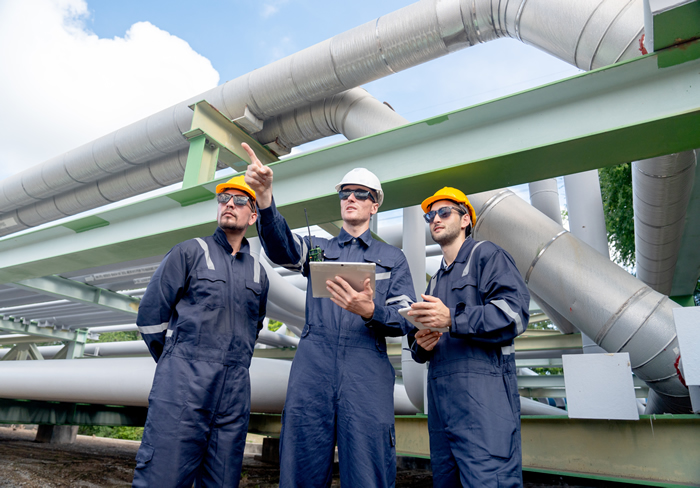
Offshore Oil & Gas Decommissioning and Asset Retirement
Mastering Late-Life Asset Retirement, Well P&A & Offshore Removal
Course Schedules
Training Course Overview
Offshore Oil & Gas Decommissioning and Asset Retirement Training Course strategies are critical as offshore production platforms approach the end of their operational lifespan. Managing these complex late-life facilities requires an integrated approach that balances structural engineering, environmental protection, financial liability, and stringent regulatory compliance across every phase of execution.
This comprehensive Offshore Oil & Gas Decommissioning Training Course provides a structured deep-dive into the entire late-life asset management and removal process. Participants explore cessation-of-production frameworks, well plug and abandonment protocols, topsides dismantling, subsea infrastructure recovery, waste minimization, seabed remediation, and long-term risk controls.
By mastering these fundamental industry practices, professionals learn to build robust execution roadmaps that effectively mitigate operational hazards, optimize project expenditures, and satisfy complex legal obligations.
Training Course Objectives
This Offshore Oil & Gas Decommissioning Training Course equips energy industry leaders with end-to-end expertise in managing complex offshore removal, well abandonment, and site remediation projects safely and cost-effectively. Participants acquire essential tools to navigate regulatory standards, model financial liabilities, and balance technical execution with environmental stewardship.
By completing this Asset Retirement Training Course, participants will be able to:
- Explain the full lifecycle of offshore oil & gas decommissioning and asset retirement operations.
- Interpret international legal conventions, national legislation, and environmental compliance frameworks.
- Formulate integrated decommissioning strategies, work breakdown structures, and execution roadmaps.
- Evaluate engineering options for well plug and abandonment, platform removal, and subsea infrastructure.
- Estimate financial provisions, decommissioning costs, contingencies, and long-term asset liabilities.
- Manage complex technical, operational, contractual, and stakeholder interfaces across project phases.
- Apply systematic risk-management and process-safety principles during offshore operations.
- Establish project assurance, seabed clearance, verification, and regulatory close-out procedures.
Designed for
This Offshore Oil & Gas Decommissioning Training Course is specifically tailored for energy industry professionals seeking to expand their technical and strategic capabilities in late-life asset management. It delivers valuable insights for multi-disciplinary teams tasked with planning, approving, and executing complex offshore removal projects.
This Asset Retirement Training Course is ideal for:
- Decommissioning and asset-retirement managers and operational directors
- Offshore installation managers, facility operations teams, and subsea engineers
- Drilling, completion, and well-integrity professionals managing plug and abandonment
- HSE specialists, environmental scientists, and regulatory compliance leaders
- Commercial, contracts, procurement, and joint-venture management personnel
- Project control experts, cost engineers, and risk management specialists
- Marine operations, logistics coordinators, and heavy-lift vessel supervisors
- Senior technical advisors and asset managers overseeing late-life field planning
Learning Methods
This Offshore Oil & Gas Decommissioning Training Course employs an interactive, practical learning framework designed to maximize knowledge retention and real-world application. Technical lectures delivered by industry experts are coupled with open discussion forums, allowing delegates to share operational insights and address specific regional compliance challenges.
Throughout the Asset Retirement Training Course, participants engage in practical case studies, risk evaluation exercises, and scenario analysis based on actual offshore projects. Working through collaborative group assignments, delegates learn to formulate comprehensive decommissioning strategies that integrate structural engineering choices, environmental impact mitigation, cost estimation models, and strict safety controls.
Course Content
Offshore Decommissioning Strategy and Regulatory Framework
- Offshore asset-retirement lifecycle and key decommissioning drivers
- International conventions, national legislation and regulatory responsibilities
- Operator, licence-holder, partner and government liabilities
- Cessation-of-production planning and decommissioning programme development
- Comparative assessment of removal, reuse and leave-in-place options
- Stakeholder identification, consultation and regulatory engagement
Engineering Assessment and Decommissioning Planning
- Asset inventories, data validation and facility-condition assessment
- Development of the decommissioning basis, scope and work breakdown structure
- Engineering surveys, structural integrity and hazardous-material identification
- Evaluation of dismantling, lifting, transportation and disposal alternatives
- Decommissioning schedule development, interfaces and critical-path management
- Project assurance, decision gates and readiness-review requirements
Wells, Platforms and Subsea Infrastructure
- Well plug-and-abandonment philosophy, barriers and verification requirements
- Management of suspended, impaired and legacy offshore wells
- Platform preparation, cleaning, isolation and removal methodologies
- Topsides dismantling, single-lift and piece-small removal strategies
- Jackets, pipelines, cables, manifolds and subsea equipment decommissioning
- Marine spreads, heavy-lift vessels, logistics and offshore execution interfaces
HSE, Environmental Management and Site Restoration
- Decommissioning safety cases, hazard identification and risk assessment
- Process isolation, hydrocarbon removal, cleaning and gas-free certification
- Marine environmental studies and environmental-impact assessment
- Waste hierarchy, material segregation, recycling and disposal controls
- Contaminated materials, naturally occurring radioactive material and hazardous waste
- Seabed clearance, remediation, verification and post-decommissioning monitoring
Commercial Management, Cost Control and Project Close-Out
- Decommissioning cost estimation methodologies and uncertainty analysis
- Financial provisioning, securities, liabilities and abandonment obligations
- Contracting strategies, procurement models and contractor management
- Cost, schedule and performance monitoring throughout project execution
- Managing change, contingency, claims and emerging decommissioning risks
- Regulatory close-out, lessons learned and long-term liability management
The Certificate
- Anderson Certificate of Completion for delegates who attend and complete the training course
In Partnership With


Learn more about this course
The course is suitable for mechanical maintenance engineers, reliability engineers, maintenance technicians, field service engineers, plant operators, production supervisors, condition monitoring specialists, and technical personnel responsible for industrial hydraulic machinery and fluid power equipment.
Yes. Participants who successfully complete the Offshore Oil & Gas Decommissioning and Asset Retirement training course will receive a Anderson Certificate of Completion, demonstrating their commitment to professional development and continuous learning. This certificate provides formal recognition of the knowledge and skills gained during the course and can support professional growth and career progression.
Yes. The Offshore Oil & Gas Decommissioning and Asset Retirement training course can be customised and delivered exclusively for organisations seeking a tailored learning solution. Course content can be adapted to address specific business objectives, operational challenges, industry requirements, and organisational priorities. Customised training allows teams to focus on the topics most relevant to their roles while supporting wider organisational development goals.
Participants attending the Offshore Oil & Gas Decommissioning and Asset Retirement training course gain access to valuable industry insights, practical techniques, and internationally recognised best practices. The course helps professionals improve performance, strengthen confidence, broaden their perspective, and develop skills that contribute to both personal and organisational success. It also provides an excellent opportunity to exchange ideas and experiences with professionals from diverse sectors and backgrounds.
No. The Offshore Oil & Gas Decommissioning and Asset Retirement training course is open to professionals from a wide range of backgrounds and experience levels. The course content is structured to provide value to both those who are new to the subject and experienced practitioners seeking to deepen their expertise. While some prior knowledge may enhance understanding of certain concepts, it is not a requirement for participation
The Offshore Oil & Gas Decommissioning and Asset Retirement training course combines practical knowledge, current industry practices, and expert guidance to create a highly relevant learning experience. Rather than focusing solely on theory, the course emphasises practical application, enabling participants to develop skills and approaches that can be implemented directly within their organisations. This balance of knowledge and practical relevance helps participants achieve meaningful and lasting professional impact.
The Offshore Oil & Gas Decommissioning and Asset Retirement training course uses a variety of learning approaches to maximise participant engagement and knowledge retention. These may include expert-led presentations, practical exercises, case studies, group discussions, scenario-based activities, and collaborative learning opportunities. This approach encourages active participation and helps participants translate learning into practical workplace results.
Yes. Industrial hydraulic systems are widely used across manufacturing plants, process facilities, heavy machinery, marine operations, utilities, and other industrial environments. The principles covered are relevant to professionals responsible for operating, maintaining, inspecting, or troubleshooting hydraulic equipment across a broad range of applications.
Still Have Questions?
Can’t find what you are looking for? Contact us and we’ll be happy to assist you with course details, corporate bookings, or technical support.